
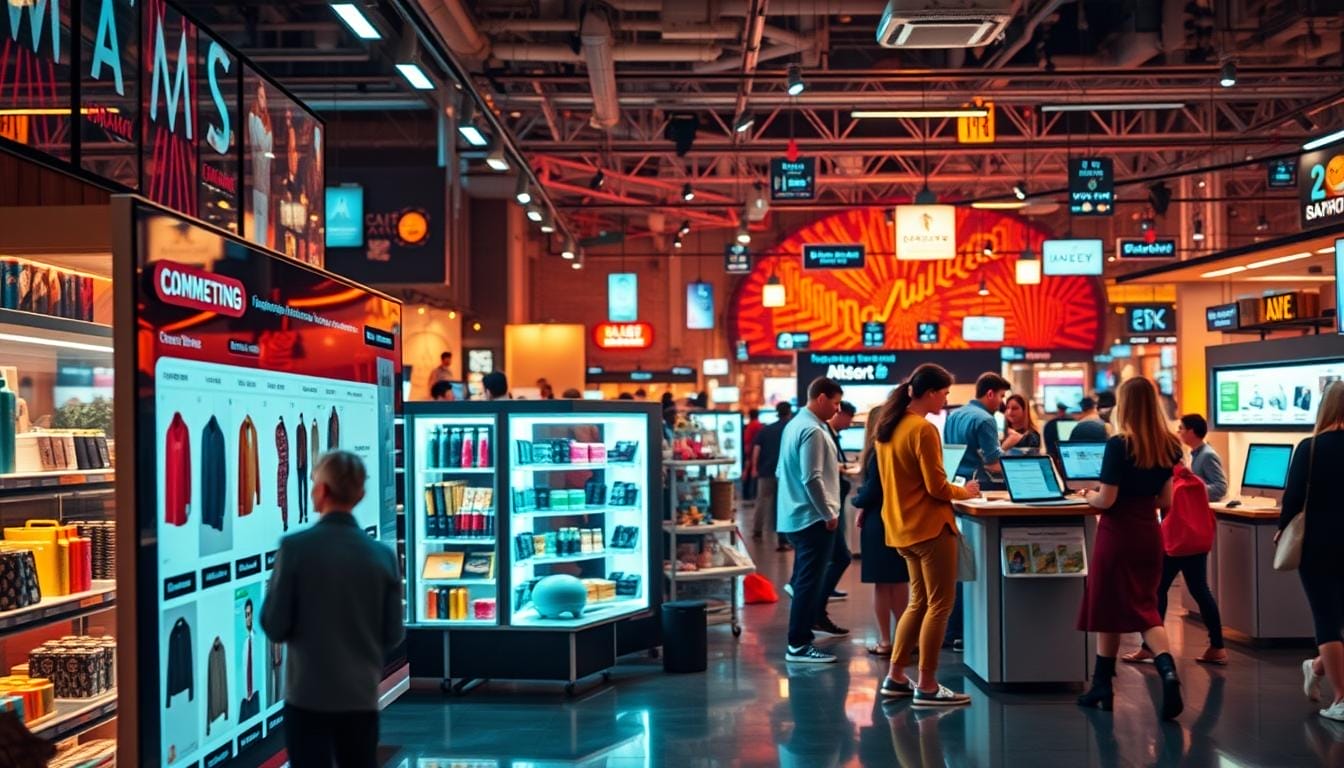
Global online sales will hit $6.3 trillion in 2024, and they may top $8.1 trillion by 2026 — a scale that reshapes how I plan marketing for every store I touch.
I focus on moves that show up in the numbers: faster website loads, smarter product placement, and clearer brand messaging. Mobile now drives over 44% of U.S. retail online store sales, so I prioritize speed and UX to protect conversion rates.
My strategy is practical and measurable. I use data to pick high-impact actions that cut cart drop-offs and lift average order value. This guide lays out step-by-step options you can test this week or scale over months.
For deeper context on marketing channels and trends, I also reference resources like ecommerce marketing insights to align tactics with current consumer behavior.
Key Takeaways
- Scale matters: global sales growth means more opportunity and more competition.
- Speed and mobile UX directly affect conversion and revenue.
- Use data to prioritize small wins that compound over time.
- Clear brand messaging builds trust and repeat customers.
- This guide gives step-by-step actions you can apply now and scale later.
My ecommerce growth mindset: data-driven, customer-first, and built to scale

I build growth plans that start with customers and scale with clear metrics.
Retention matters: acquiring new customers can cost up to five times more than keeping existing ones, so I bias toward lifetime value. Personalization, when done well, can lift revenue by 10–15%, which is why segmentation and tailored experiences come early in my plan.
How I align brand, products, and customer experience for compounding gains
I set quarterly goals tied to conversion, repeat purchase rate, and average order value. Then I use simple data to pick the highest-leverage work and stop what does not move metrics.
- Serve customers better: align brand promise, product fit, and on-site flows to reduce friction and raise perceived value.
- Measure outcomes: tie each experiment to a KPI so strategy stays outcome-focused.
- Map the journey: find gaps from first touch to post-purchase, then remove confusion or add delight.
- Mobile-first and practical personalization: speed and relevant content boost user experience and conversion.
| Metric | Quarterly Goal | Why it matters | Example Target |
|---|---|---|---|
| Conversion rate | +0.5–1.0% | More revenue from the same traffic | Increase checkout completions by 8% |
| Repeat purchase rate | +3–5% | Lowers acquisition pressure | Raise 30-day repurchase by 12% |
| Average order value (AOV) | +5–10% | Boosts lifetime value | Lift AOV by $7 via bundles |

I keep learning. For quick skill boosts, I use e-books, short courses, and free webinars from my digital library at digitals.anthonydoty.com to help the team execute smarter and faster in real business settings.
Winning ecommerce tactics I rely on for consistent results
My approach groups high-impact work into clear phases that teams can execute quickly.
Acquisition, conversion, and retention form the three pillars I use to prioritize work and measure progress.
Quick-glance strategy map: acquisition, conversion, and retention

Acquisition: SEO to capture intent, targeted social media content, and paid ads fill demand fast.
Conversion: product pages, clear offers, trust cues, and a streamlined checkout raise site conversion.
Retention: email journeys, loyalty, and win-backs keep customers returning and lift lifetime value.
What I implement first vs. what I optimize over time
I start with foundational search engine work (titles, meta, URLs, and site structure) because it compounds and lowers costs over time.
I also launch key email flows on day one—welcome, abandoned cart, and post-purchase—to recover revenue and deepen relationships immediately.
Then I activate high-fit social channels like TikTok and Instagram for awareness and social commerce, while using PPC and retargeting to test messaging and recover visitors.
- I streamline checkout and clean up product pages early for quick conversion wins.
- I pace evergreen sprints—speed tuning, internal linking, long-form content, and advanced segmentation—after launch.
- I plan flash sales, bundles, and seasonal offers with clear goals so I can measure impact and iterate.
Example: flash sales often drive up to 50% of sales in the first hour, and cart abandonment averages just over 70%, so recovery flows get priority.
For strategic reference and deeper planning, see this ecommerce strategy guide I use when mapping acquisition and retention work.
SEO foundations that compound: keywords, site speed, and UX working together
I aim for compound improvements that let a website earn more organic traffic each quarter. Strong foundations mean small changes stack into real growth over time.
On-page wins start with mapping high-intent search terms to category, product, and guide pages. I add those terms into titles, meta descriptions, URLs, and headings so each page reads clearly to a search engine and to users.
Technical lifts that matter
Site speed is non-negotiable: I compress images, defer non-critical scripts, and adopt mobile-first layouts to raise load times. Faster pages keep customers on the site and improve conversion.
I also improve internal linking so search engines and shoppers find related products and content fast. Fixing duplicate content, thin pages, and broken links protects crawl budget and ranking equity.
Authority signals for richer results
I implement structured data (Product, Breadcrumb, FAQ) to earn rich results like price and ratings. Then I publish helpful content and pursue backlinks from relevant sites to build trust and long-term visibility.
For practical steps and a deeper playbook, see my guide on SEO 2025 strategies. Investing in evergreen optimization stabilizes acquisition costs and scales with product catalogs.
Conversion-focused website design: turn browsers into buyers
I build site layouts that reduce friction and make buying the easiest choice. A one-second delay can cut conversions by about 7%, so speed and clarity lead this work.
I simplify navigation so shoppers reach categories and product pages in one to two clicks. That lowers bounce and keeps intent moving toward checkout.
Navigation, page layout, and clear calls to action that reduce friction
I design pages with a clear hierarchy: scannable sections, prominent CTAs, and trust cues near the add-to-cart area. Personalized CTAs often perform far better than generic ones, so I test them early.
- Mobile first: thumb-friendly buttons, concise copy, and fast-loading images to match how people buy now.
- Focused landing pages: align headlines, imagery, and offers to the ad or post that sent the traffic.
- Avoid clutter: fewer distractions near the cart button help customers decide.
High-quality visuals and 3D/interactive views to boost product confidence
High-quality photos, video, and 3D views cut uncertainty—about half of online shoppers rely on visuals for decisions. I pair benefits with specs and place social proof and FAQs near CTAs to remove last-minute objections.
I monitor scroll depth and click maps to spot friction and iterate quickly. This is the way I lift conversion rate while keeping the store experience cohesive and trustworthy.
High-ROI email marketing: from capture to conversion to loyalty
A focused email plan captures value at every stage: sign-up, cart recovery, and post-purchase. Email marketing often returns more revenue per dollar than many other channels, so I treat it as a core growth engine for my store.
List growth playbook: popups, incentives, and value exchanges
I grow lists with clear value offers. I use short, value-driven popups, gated guides, and checkout forms that make subscribing an obvious win for customers.
Lifecycle journeys: welcome, abandoned cart, post-purchase, and win-back
Welcome emails introduce the brand and top products while attention is highest.
Abandoned cart flows remind shoppers, add helpful details (shipping, returns, reviews), and occasionally test a small incentive to recover high-intent carts.
Post-purchase messages confirm value, request feedback, and suggest complementary items to lift average order on future purchases.
Personalized product recommendations and segmentation for higher AOV
I segment by behavior—browse history, categories viewed, and purchase cadence—to keep messages relevant and concise. Personal product suggestions increase click-throughs and revenue per send.
| Journey | Primary Goal | Key Metric |
|---|---|---|
| Welcome series | Introduce brand & drive first purchase | Placed order rate |
| Abandoned cart | Recover high-intent carts | Recovered revenue |
| Post-purchase | Confirm value & cross-sell | Repeat purchase |
| Win-back | Re-engage lapsed customers | Reactivation rate |
I measure opens, clicks, placed order rate, and unsubscribes to refine subject lines, cadence, and creative. Short, visual-forward, mobile-optimized emails with one clear CTA perform best in my hands.
Social media and influencer engines: awareness that actually converts
I build social strategies that move people from discovery to product page in a few taps. Around 63% of the global population uses social media, so I treat those channels as direct paths to sales and to loyal customers.

TikTok authenticity, Instagram Shop integration, and UGC momentum
I focus on native content: short videos, stories, and carousels that teach, demo, or inspire. On TikTok I lean into candid how-tos and behind-the-scenes clips because less-edited media often earns higher reach and engagement.
I add Instagram Shop tags to posts and reels so a click moves shoppers to my store with fewer steps. I also amplify customer photos and tutorials to build trust and lift product clicks.
Influencer and affiliate partnerships that shorten the path to purchase
I partner with creators who match my audience and give them clear briefs and trackable links. I test affiliates alongside influencer work to scale reach while paying for performance.
| Channel | Primary Goal | Key Metric | Example Action |
|---|---|---|---|
| TikTok | Awareness & engagement | Saves, shares, video views | Short how-to + product demo |
| Instagram Shop | Shorten purchase path | Product clicks, checkout starts | Tag products in reels |
| Influencers & Affiliates | Drive qualified traffic | Attributed sales, CPL | Trackable links & discount codes |
I measure saves, shares, and product clicks—not just likes— and I boost top posts with modest ads to widen reach. Then I retarget engaged audiences with tailored pitches that nudge them back to the store.
PPC and retargeting: profitable traffic on demand
Paid search and smart retargeting give me predictable traffic that I can tune for profit. In PPC you pay only when someone clicks, so budget control is precise and results are measurable.
Google Shopping and Meta ads: audience targeting and creative fit
I run Google Shopping to show catalog items to in-market buyers and pair it with search campaigns for high-intent queries.
I use Meta ads to test creative and audience segments fast, then scale what works while managing frequency and spend.
Retargeting sequences that recover intent and lift conversion rate
Start with people who already visited your site. I retarget site visitors, cart viewers, and product engagers first because recapturing known interest is usually the fastest path to profitable sales.
- Match creative to landing pages so the ad promise equals the site experience; this helps quality score and conversion rate.
- I structure campaigns by category, margin, and demand so budgets flow to what converts and protects ROAS.
- I feed performance data back into product pages and FAQs to fix friction that ads expose.
- I rotate creative and use UGC plus benefit-led messages to avoid ad fatigue.
- I monitor click-through, CPC, CPA, and ROAS, and I test bids, audiences, and creative weekly.
| Channel | Primary Goal | Key Metric | When to start |
|---|---|---|---|
| Google Shopping | Catalog visibility | Product clicks | After feed optimization |
| Search campaigns | Capture intent | Cost per acquisition | On launch |
| Meta ads | Audience testing | ROAS | Once creative bank exists |
| Retargeting | Recover intent | Recovered sales | Day 1 (scale after wins) |
My rule: I never set and forget. Coordinating ads with email and social calendars multiplies impact and shortens the path from interest to purchase.
Personalization that drives revenue: behavior, location, and timing
I design personalized site paths that guide each shopper toward the products they actually want.
Effective personalization can lift revenue by 10%–15% when I tailor homepages, product displays, and messages to user behavior and past purchases.
Dynamic content and product recommendations that increase average order value
I personalize homepages and category pages using recent views, trending items in a shopper’s area, and back-in-stock alerts.
Product recommendations appear on PDPs, carts, and emails to boost average order and to surface frequently bought together items.
- I segment customers by lifecycle and category interest so offers feel helpful, not intrusive.
- I time onsite messages by intent—size guides for size-sensitive users and urgency cues for repeat viewers.
- I rotate banners by location and season to keep media and products relevant to local moments.
- I cap overlays and prompts to protect site speed and user experience.
I measure impact by comparing personalized vs. non-personalized journeys on click-through, add-to-cart, and orders. I use that data to prune low-impact rules and double down on what delivers value across marketing channels and the website.
Reduce cart abandonment and optimize checkout
Cart drop-off steals revenue; I treat reducing it like a priority metric. Cart abandonment sits just over 70% on average, so recovery programs are not optional for any online store.
I focus first on checkout friction. I remove unnecessary fields, enable guest checkout, and add accelerated payment methods to lift conversion rate quickly.
Recovery emails, SMS nudges, and small value boosts that win back shoppers
Timing matters. I send an abandoned cart email within hours that highlights the items left behind and reminds shoppers of shipping, returns, and reviews.
- I add an SMS nudge for high-intent carts and sometimes include a short, limited-time perk.
- I surface trust badges, delivery estimates, and concise policies on the checkout page to lower anxiety.
- I auto-save carts across devices and monitor error rates to fix address and payment failures fast.
- I test free-shipping thresholds, samples, and bundle discounts to make purchase completion easy.
- I run A/B tests on forms, shipping options, and order summaries and track recovery performance weekly.
| Action | Why it works | Metric to track |
|---|---|---|
| Abandoned cart emails | Recovers high-intent buyers | Recovered sales |
| SMS reminders | Fast attention and high open rates | Clicks to cart |
| Checkout simplification | Reduces drop-off steps | Conversion rate |
| Auto-save carts | Reduces friction for returning shoppers | Checkout completions |
Build trust at every touchpoint: reviews, live chat, and social proof
Trust grows when every interaction answers a shopper’s doubt before it becomes a reason to leave. I show social proof and offer real-time help so a user can decide with confidence.
Where I place reviews and how live chat removes objections
I place reviews and ratings near the add-to-cart area on product pages and include a short highlights box that summarizes praise and common concerns.
I feature select testimonials on the homepage to give immediate credibility, then link to full reviews for shoppers who want more depth.
I use live chat to answer fit, materials, shipping, and returns questions in real time. I target chat prompts to repeat visits, long dwell time on shipping info, and other high-intent behaviors.
- I curate social proof galleries with customer photos and short videos to show items in real life.
- I publish clear policies and add badges where relevant to reduce pre-purchase anxiety.
- I moderate reviews, respond empathetically, and track chat objections to update pages and FAQs.
| Action | Why it helps | Metric |
|---|---|---|
| Product page reviews near CTA | Raises confidence at purchase moment | Conversion uplift |
| Targeted live chat | Resolves objections instantly | Chat-to-order rate |
| UGC galleries | Shows real use and builds trust | Engagement & clicks |
Bundles, upsells, and cross-sells that elevate perceived value
Product recommendations and clear bundles can drive revenue more efficiently than chasing new traffic.
I design offers that make sense to shoppers. Bundles match natural use-cases—starter kits, repair sets, and essentials—so the combined price feels like clear value. Upselling higher-value variants often raises the average order while costing less than acquisition.
Smart merchandising: “frequently bought together” and no-brainer offers
I add “frequently bought together” modules on product pages and in the cart to surface complementary items at the moment of intent.
- I position premium product variants with short benefit bullets so the upgrade reads like a smarter choice, not a hard sell.
- Cross-sell items are lower-priced and tightly relevant to the main product to encourage quick adds without shaking confidence.
- I use clear comparisons between product tiers so shoppers see differences and choose faster.
- Post-purchase upsell prompts target add-ons that complement what was just bought, raising average order later with low friction.
“Bundles and well-timed recommendations increase attachment rates and keep the cart moving toward checkout.”
I test bundles by season and audience, track conversion and attachment rates, and retire low performers. I keep the cart clean—one or two high-fit suggestions—so momentum to checkout stays strong and conversion rate improves.
Level up your skills: e-books, courses, design kits, and FREE webinars
I collect actionable resources that let you test one improvement and measure the result in days. Continuous learning accelerates execution across SEO, email, social media, and paid channels.
Explore my favorite resources to sharpen your marketing strategy
I curated a practical guide of e-books, courses, and design kits to help you move faster and with more confidence.
- I recommend a marketing strategy workbook to map goals, channels, and quarterly priorities.
- Web design kits speed landing page builds and keep your website consistent across product pages.
- Trainings cover social media content, UGC workflows, and influencer briefs so campaigns run smoother.
- Email and lifecycle templates cut setup time for welcome, abandoned cart, and post-purchase flows.
Grab free webinar seats and top-tier digital assets at digitals.anthonydoty.com
Webinars dig into timely topics—SEO updates, ad creative testing, and conversion audits—so you can act with current best practices.
- I show you how to choose the right resource for your business stage to save time and budget.
- My library updates regularly with materials that reflect what’s working now, not last year’s playbook.
🚀 Boost your skills with our digital library—grab free webinar seats and download assets at digitals.anthonydoty.com.
Learn, implement, iterate: small improvements compound fast when you keep moving.
Conclusion
I close by tying the roadmap to a simple plan you can run this week. Build a steady strategy: grow SEO and social media presence, speed up a key page on your site, and start a welcome email series to retain customers.
Small, consistent work compounds. Prioritize customer experience over shortcuts and measure the right number of metrics for your business. Pick one example — speed or email — and test it this week. Track results, then repeat what moves the needle.
Keep learning: explore e-books, courses, and FREE webinars to level up fast. 🚀 Boost your skills with our digital library at digitals.anthonydoty.com.
Align brand, products, and website experience and your online store becomes the obvious choice for customers.
FAQ
How do I align brand, products, and customer experience to drive compounding growth?
I start by mapping the customer journey and matching brand messaging to each touchpoint. I use product positioning that reflects real customer needs, optimize the website UX for clear navigation and fast load times, and collect feedback through reviews and chat. This creates consistent experiences that increase trust, repeat purchases, and lifetime value.
What should I implement first versus optimize over time?
I prioritize fundamentals: fast mobile-first site speed, clear product pages with strong visuals, and basic email capture flows. Once those convert, I layer on optimizations like personalized recommendations, advanced segmentation, A/B tests for checkout, and paid media scaling. This ensures quick wins and sustainable growth.
Which SEO foundations deliver the biggest compounding returns?
I focus on keyword-aligned titles and meta descriptions, product page optimization, clean URL structure, and structured data for rich results. Pairing that with site speed improvements and mobile-friendly design amplifies organic traffic and reduces bounce rate over time.
How do I improve conversion rates with site design?
I streamline navigation, use clear calls to action, and reduce decision friction on product pages. High-quality images, interactive 3D views when possible, and trust signals like reviews and secure checkout badges all raise confidence and completion rates.
What email flows should every store have right away?
I set up a welcome series, abandoned cart recovery, post-purchase follow-up, and a simple win-back sequence. These lifecycle journeys capture intent, recover lost sales, and nurture repeat buyers while providing data for future personalization.
How can I increase average order value without harming conversion rate?
I use personalized product recommendations, strategic bundles, and subtle upsells at checkout. “Frequently bought together” widgets and limited-time cross-sell offers add perceived value and lift AOV when implemented with clear pricing and easy opt-out.
What social strategies actually move the needle for sales?
I prioritize authentic short-form content on TikTok, shoppable Instagram posts, and user-generated content to build trust. I also work with micro-influencers and affiliate partners whose audiences match my product, which shortens the path to purchase and improves ROAS.
How do I run profitable PPC and retargeting campaigns?
I combine Google Shopping for high-intent shoppers with Meta ads for scalable creative testing. I segment retargeting by behavior — viewed product, added to cart, or past buyer — and tailor sequences to recover intent and nudge conversions at different price points.
What personalization tactics give the best ROI?
I use behavior-based recommendations, location-aware promotions, and time-sensitive offers. Dynamic homepage content and email product picks based on past browsing or purchase behavior raise relevance and increase conversion without heavy media spend.
How do I reduce cart abandonment effectively?
I combine recovery emails, timely SMS nudges, and checkout friction removal — like guest checkout, multiple payment options, and clear shipping costs. Adding small incentives or urgency messaging for high-intent carts can recover a significant portion of abandoned orders.
Where should I place reviews and live chat to build trust?
I surface reviews on product pages near the CTA, include aggregated ratings in search snippets via structured data, and add live chat on product and checkout pages. Quick, helpful chat responses convert hesitant shoppers and reduce return inquiries.
What merchandising tactics increase perceived value?
I implement bundles, upsells, and cross-sells that solve customer problems rather than just increasing price. “Frequently bought together” recommendations, tiered discounts, and curated collections make higher-value purchases feel like smarter choices.
How can I keep learning and improving my marketing skillset?
I regularly read industry blogs, take practical courses, and attend webinars. I also recommend hands-on resources like e-books, design kits, and free webinars to test strategies quickly and build repeatable processes for growth.


